
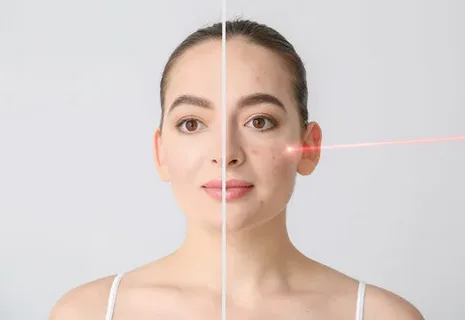
Acne is a common skin issue that affects many people, especially teenagers and young adults. While acne can usually be treated with medication and proper skincare, the scars it leaves behind can be more challenging to get rid of. These scars can harm self-esteem and affect a person’s confidence. One popular treatment for reducing the appearance of acne scars is laser therapy. In this article, we will explore how laser therapy works, its benefits, and how it compares to other skin care treatments for acne scars.
What Are Acne Scars?
Acne scars are the marks left on the skin after an acne outbreak heals. When the skin is damaged by deep acne, the body repairs the skin by forming scar tissue. There are different types of acne scars, including:
- Ice Pick Scars: These are deep, narrow scars that look like small puncture holes.
- Boxcar Scars: These scars have sharp edges and a round or oval shape.
- Rolling Scars: These scars give the skin a wavy or uneven appearance.
- Hypertrophic Scars: Raised scars caused by excessive collagen production during healing.
These scars can be tough to treat, but laser therapy for acne scars has become a popular solution in recent years.
What Is Laser Therapy for Acne Scars?
Laser therapy for acne scars uses focused light energy to target and treat the skin. This advanced treatment works by either removing damaged skin layers or stimulating collagen production beneath the skin’s surface. Collagen, a vital protein, helps the skin heal, improving its smoothness and elasticity.
At Arynova Aesthetics, we offer a variety of laser therapy for acne scars treatments, tailored to the severity of your scars. Our laser treatments are designed to smooth the skin, reduce the visibility of scars, and promote the growth of healthier skin, giving you the clear, rejuvenated complexion you deserve.
Types of Laser Treatments for Acne Scars
Laser treatments for acne scars generally fall into two categories: ablative lasers and non-ablative lasers.
Ablative Lasers
Ablative lasers, such as CO2 lasers and Erbium YAG lasers, work by removing the outer layer of damaged skin. This process is known as skin resurfacing. These lasers help treat more severe scars by promoting the growth of fresh skin. Although ablative lasers are highly effective, they may require a longer recovery period, and you may experience some redness and swelling afterward.
Non-Ablative Lasers
Non-ablative lasers, like fractional CO2 lasers and pulsed dye lasers, focus on the deeper layers of the skin without damaging the surface. These lasers stimulate collagen production and encourage healing beneath the skin’s surface, making them ideal for treating mild to moderate scars. Non-ablative lasers are generally less invasive and have shorter recovery times compared to ablative lasers.
How Does Laser Therapy Work?
Laser therapy works by delivering concentrated light to the skin, which is absorbed by the scar tissue. This process helps to break down the scar tissue and encourages the skin to produce new, healthy cells.
- Ablative lasers remove the outer layer of the skin, which promotes the healing of deeper layers.
- Non-ablative lasers target the deeper layers of skin to stimulate collagen production and heal scars from beneath the surface.
Laser treatments can be customized based on the type and severity of acne scars.
Benefits of Laser Therapy for Acne Scars
Laser therapy offers several benefits for people dealing with acne scars. Some of the main advantages include:
- Improved Skin Texture and Tone: By promoting collagen production, laser therapy helps smooth the skin and even out skin tone.
- Precision: Laser treatments can target specific areas with accuracy, making it suitable for treating different types of acne scars.
- Minimal Downtime: Non-ablative lasers usually involve little to no downtime, allowing patients to get back to their regular activities quickly.
- Non-Surgical: Unlike surgical treatments, laser therapy does not involve cuts or incisions, making it a less intimidating option for many people.
- Long-Lasting Results: After completing the recommended number of sessions, patients can see lasting improvements in the appearance of their scars.
- Safe for Most Skin Types: Laser therapy is generally safe for various skin tones and types, although some lasers work better on specific skin tones.
What to Expect During and After Treatment
Laser therapy for acne scars typically involves multiple sessions, depending on the severity of the scars and the type of laser used. Before the treatment, the skin will be numbed with a topical anesthetic to ensure comfort. During the treatment, you may feel a slight tingling or heating sensation.
After the procedure, you might experience some redness or swelling, especially if an ablative laser was used. This is a normal part of the healing process. The recovery time varies based on the type of laser, but with non-ablative lasers, patients usually return to their daily activities almost immediately. At Arynova Aesthetics, we ensure that all our skin care treatments are designed for minimal downtime, allowing you to enjoy the benefits of smoother, clearer skin with ease.
Comparison with Other Acne Scar Treatments
Laser therapy isn’t the only option available for treating acne scars. Here’s how it compares to other popular skin care treatments:
Chemical Peels
Chemical peels use acids to exfoliate the skin’s outer layers, helping to improve skin texture and reduce scars. While effective for mild scars, chemical peels might require several sessions to achieve noticeable results.
Microneedling
Microneedling involves using tiny needles to create controlled injuries in the skin, stimulating collagen production and improving scar appearance. Like laser therapy, microneedling helps with mild to moderate scars but may take more sessions for full results.
Dermal Fillers
Dermal fillers can temporarily fill in deeper scars, making them less noticeable. However, this is a short-term solution, and the results may wear off after a few months.
Subcision
Subcision is a procedure where a needle is used to break up the fibrous tissue under the skin, helping to release the scar tissue and improve the appearance of the skin. This method is often used for deeper scars and might require several treatments.
Is Laser Therapy Right for You?
Laser therapy for acne scars can be highly effective, but it’s essential to consult with a dermatologist to determine if it’s the best option for you. Your doctor will assess your skin type, the severity of your scars, and your overall health to decide the most suitable treatment plan.
While laser treatments can provide impressive results, they are not the only solution for acne scars. Sometimes, a combination of treatments may be recommended to achieve the best outcome. A personalized approach, guided by a professional, ensures that you get the most effective treatment for your needs.
Conclusion
Laser therapy for acne scars is an advanced, effective treatment that can significantly improve the appearance of the skin. With different types of lasers available, it offers a solution for both mild and severe acne scars. While it is a popular and highly effective option, other treatments like chemical peels, microneedling, and dermal fillers can also be considered based on individual needs.
If you’re looking for a long-term solution to reduce the appearance of acne scars, laser therapy might be just what you need. Consult with a skincare professional to explore this treatment and find the best approach for your skin.